
Obby: Disaster Survival
Blox GlobalAdventure
3.316.00 Reviews
- Version
- 1.12
- Installs
- 1.00M
- Age Rating
- Everyone
Screenshots
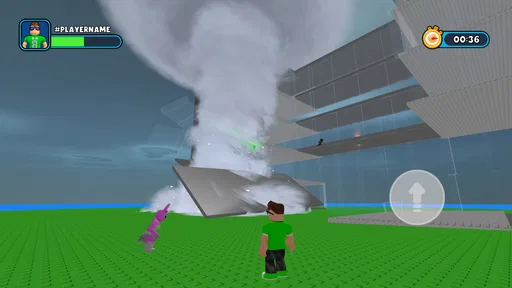
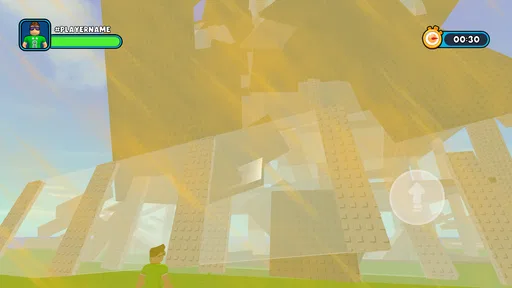
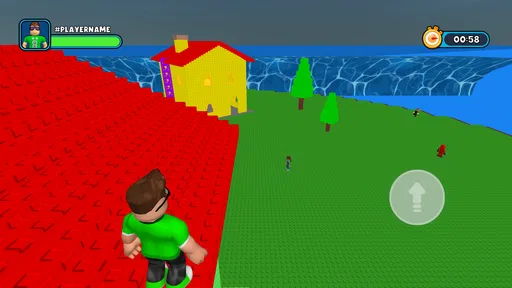
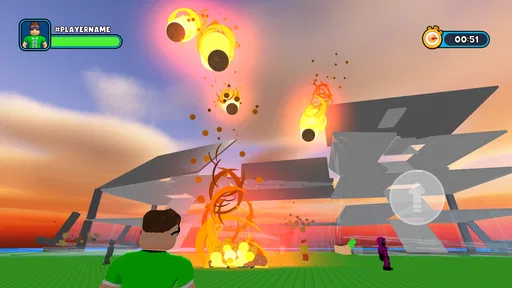
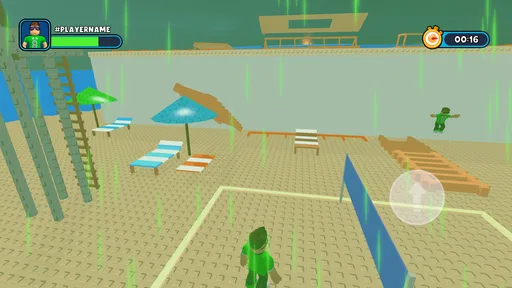
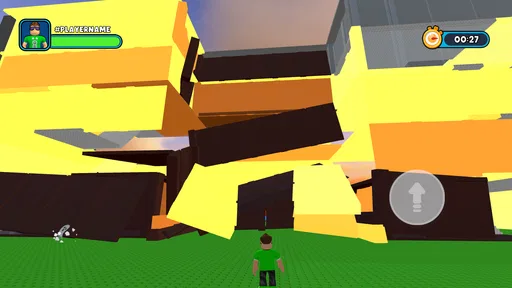
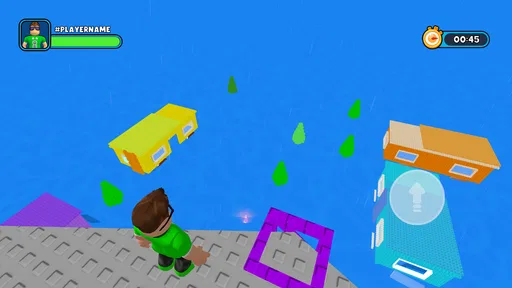
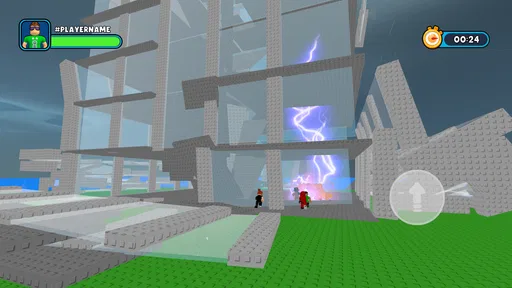
Our Review of Obby: Disaster Survival
 Analysis by Appyee
Obby: Disaster Survival is an adventure game built around a simple but effective question: can I keep moving when the course itself is trying to throw me off? Developed by Blox Global, it places obstacle-course play inside a disaster-survival setting, giving the familiar obby format a more urgent edge. I found that the appeal comes less from a deep story and more from the pressure of making quick decisions while navigating hazards.
The game is free to play, aimed at Everyone, and available for devices running Android 7.0 or later. It has already passed one million installs, so it is not a tiny experiment that only a few players have encountered. Its average rating sits at 3.3 from around 1.9 thousand ratings, which tells me the experience has attracted a substantial audience but also produces mixed reactions. That balance is important: this is an easy game to try, but not one I would recommend blindly to every adventure fan.
How the disaster-obstacle idea works in practice
The strongest part of the concept is the combination of two familiar game ideas. An ordinary obstacle course asks me to judge jumps, timing, and movement. A survival game adds urgency by making the environment feel unsafe. Here, those ideas work together: I am not simply trying to reach the end of a route; I am trying to do it while responding to a changing threat.
That difference affects how I play. In a standard obby, I can often settle into a rhythm and repeat the same movement until it works. A disaster-focused course encourages me to watch the surroundings, pause before committing, and decide whether speed or caution is more valuable. A fast jump may save time, but a safer route can be better if the environment is becoming dangerous.
I also like that the premise is immediately understandable. There is no long learning curve before the central idea makes sense. The game belongs clearly to the adventure category, yet its moment-to-moment play is closer to a reaction challenge than to a traditional exploration adventure. Players who enjoy short attempts, repeated practice, and the satisfaction of finally clearing a difficult section will understand the attraction quickly.
My first practical tip is to avoid treating every obstacle as a race. The disaster theme can make players rush, but rushing often turns a manageable jump into an unnecessary mistake. I had better results by looking for the safest landing point first, then moving as soon as the path opened. That small change in attitude is more useful than simply trying to move faster.
The current experience is best for short sessions
I see this as a game that fits naturally into short breaks. It works when I want something interactive without committing to a long narrative, a complicated team arrangement, or a large collection of menus. A quick attempt before leaving home, a few rounds during a break, or a casual session with a younger player all make sense.
That convenience has a trade-off. Players who want a strong story, character development, or a large world to explore may find the experience narrow. The disaster setting gives the obstacle courses personality, but the core loop remains focused on movement and survival. If I am looking for an adventure game with dialogue, discovery, and a substantial campaign, this would not be my first choice.
The Everyone age rating also makes the game approachable for families, although I would still judge it by the individual player rather than the label alone. A child who enjoys repeated platforming challenges may have a great time. Someone who becomes frustrated after failed jumps may need supervision or shorter sessions. The rating makes it broadly accessible, but it does not guarantee that every difficulty spike will feel comfortable.
What version 1.12 tells me about its stage of development
The current version is 1.12, while the game was released on September 20, 2025. That places the review in an early period of the product’s life rather than after years of gradual expansion. I read that as a sign that the game is still establishing its identity. Blox Global has moved beyond a first launch build, but I would not assume that the experience has reached its final shape.
Version 1.12 matters mainly because it gives existing players a clear reference point. If someone tried the game near release and is deciding whether to return, the sensible approach is to judge the present build on its own rather than rely entirely on an old first impression. Early games can change quickly, and a version number above the original release suggests ongoing maintenance or adjustment, even though I would not treat that alone as proof of a major redesign.
For new players, the practical benefit is simpler: downloading the current build means starting from the same baseline as the active audience. I would not install an older copy to compare small differences unless I had a specific reason. With a game centered on timing, consistency between players’ experiences is more useful than preserving an earlier build.
At the same time, the version number should not be mistaken for a promise of a large amount of new content. A later build can contain refinements as well as additions. My judgment is that the game should be approached as a developing obstacle-survival title, not as a finished, content-heavy adventure with a long history behind it.
What the rating and audience size suggest
An average of 3.3 is neither a clear endorsement nor a warning to avoid the game. It suggests that the central idea works for some players while others encounter enough friction to lower their opinion. With around 1.9 thousand ratings and roughly 1.9 thousand public ratings represented in the store’s visible audience, the score has more weight than a handful of early reactions, but it still cannot tell me exactly which issues affected each person.
The install figure, above one million, shows that the concept has reached a broad mobile audience. That is useful context for someone deciding whether the game is worth trying: there is clearly interest in the format. It also means I should expect a game designed for quick understanding rather than a niche simulation with a steep entry barrier.
I would use the rating as a reason to keep expectations measured. The game is free, so the cost of testing it is low in financial terms, but time and patience still matter. If I enjoy obstacle courses, the trial is worthwhile. If I dislike repeating a section after a missed jump, the moderate rating is a useful warning that the disaster-survival framing may not remove the usual frustrations of the obby format.
Small decisions that make attempts more reliable
One useful habit is to separate observation from movement. When I enter a new section, I try to spend a moment identifying the safest route instead of immediately following the most obvious platform. In a disaster-themed course, the visually direct path may not be the best one. Looking for stable ground and a clear landing angle can reduce failed attempts.
A second tip is to change only one part of a failed attempt. If I alter speed, jump timing, and route choice all at once, I cannot tell what solved the problem. Repeating the same approach with one controlled adjustment turns failure into information. This is especially valuable for younger players, because it transforms frustration into a small experiment rather than a reason to quit.
A third insight concerns session length. When my timing starts to deteriorate, continuing immediately can create a chain of avoidable mistakes. The game’s short-session nature makes it practical to stop after a few poor attempts and return later. That is not a weakness in the design; it is a sensible way to handle a precision-focused game on a phone, where attention is easily interrupted.
I would also avoid judging progress only by whether I finish. Learning which obstacles cause hesitation, which jumps need a slower approach, and where panic appears during a disaster event gives each attempt value. That mindset makes the game more enjoyable than treating every unsuccessful run as wasted time.
How it compares with ordinary obby games
Compared with a conventional obstacle-course game, this title has a stronger sense of immediate danger. The disaster theme gives familiar jumping and route selection a reason to feel urgent. I am more likely to scan the area and think about timing instead of viewing each platform as an isolated test.
However, the same theme can make the experience feel less predictable than a carefully staged standard obby. Players who prefer calm practice may favor a traditional course where the layout and rhythm are easier to read. In that situation, the usual alternative is better because it emphasizes mastery of a fixed route rather than survival under pressure.
Compared with a broader mobile adventure game, this one is much more direct. There is less overhead between the player and the challenge, which is a strength when I want immediate action. The trade-off is that the experience may feel limited to anyone expecting exploration, puzzles with multiple solutions, or a narrative reason to keep going.
I would choose this game over a standard obby when I want a faster, more tense session. I would choose a conventional platforming game when I want predictable practice, and a story-led adventure when I want atmosphere and progression beyond completing courses. Its best quality is not that it replaces those alternatives; it is that it gives the obby format a more urgent flavor.
Where the experience still falls short
The main limitation is the narrowness of the core loop. Once I understand that the game is asking me to navigate obstacles while surviving disasters, the basic appeal is clear. If the courses do not keep offering fresh decisions, repeated attempts can begin to feel similar. That is the central risk for long-term players.
The moderate average rating also makes me cautious about recommending it to people who demand polish in every interaction. Obstacle games are sensitive to movement feel, camera behavior, and the clarity of hazards. Even a small moment of uncertainty can feel unfair when a player believes a jump should have succeeded. I would expect patient players to tolerate that better than competitive players who want exact, highly consistent control.
Another gap is the lack of a strong reason for every type of player to return. The disaster premise creates a good first impression, but a lasting routine depends on more than novelty. Players who enjoy personal improvement may create their own goals, such as clearing a section without rushing or reducing mistakes. Those who need a large progression system or a story-driven reason to continue may find the motivation weaker.
Because the game is free, it is easy to give it a fair trial. Still, “free” does not mean it is automatically the right use of storage, attention, or patience. I would skip it if I already know that obstacle courses make me angry, if I want a relaxing game with no pressure, or if my main interest is narrative adventure rather than reflex-based survival.
Who should download it, and who should pass
I would recommend it to players who like compact challenges, quick retries, and the feeling of reacting under pressure. It is particularly suitable for someone who enjoys obby games but wants a more dramatic setting than a plain sequence of platforms. It can also work for a casual family gaming moment because the premise is easy to explain and the age rating is Everyone.
I would be more selective with players who need a dependable long-term progression path. The current build may be worth sampling, especially because it is free, but I would not choose it over a deeper adventure game if my priority is exploration or story. Likewise, competitive players should try it before committing emotionally; the average rating indicates that the experience may not satisfy everyone seeking highly polished precision.
For an everyday scenario, imagine having ten minutes before an appointment. I could open the game, attempt a course, learn one dangerous section, and stop without losing the thread of a campaign. That is where the design makes sense. On a longer evening when I want a world to settle into, I would probably pick a more expansive adventure instead.
What I would watch as the game develops
With version 1.12 and a release date in September 2025, I would pay attention to how Blox Global develops the experience from here. The most meaningful progress would be anything that makes failures easier to understand, keeps the disaster situations feeling distinct, and gives experienced players a reason to return without making first attempts confusing.
I would also watch whether future changes improve consistency for players on different devices and whether the courses continue to reward careful decisions rather than pure speed. Those are the areas that determine whether the game grows from a clever premise into a durable adventure title. A new version number by itself is not enough; the important question is whether each update improves the moment-to-moment experience.
For someone installing today, my advice is straightforward: start with modest expectations, learn the routes patiently, and judge the game after several attempts rather than one frustrating failure. The free price makes experimentation easy, while the broad install base shows that the idea has found an audience. Just remember that popularity does not remove the need for patience.
My final view is positive but measured. Obby: Disaster Survival gives the familiar obstacle-course formula a useful burst of urgency, and I appreciate how quickly it gets to the challenge. It is best as a short-session adventure for players who enjoy timing, route choices, and repeated improvement. Its limitations are equally clear: the loop may feel narrow, and anyone searching for a rich story or expansive exploration should choose another kind of game. For the right player, though, this is an accessible free download with a distinctive survival twist and enough tension to make a simple obby feel fresh.
Verdict
Strengths of Obby: Disaster Survival
- Fast-paced obstacle courses keep each round exciting.
- Simple controls make it easy for new players to start.
- Disaster events create unpredictable and replayable matches.
- Short rounds fit well into quick gaming sessions.
- Colorful environments are appealing to younger players.
Limitations of Obby: Disaster Survival
- Some obstacles may feel difficult without repeated practice.
- Random disasters can occasionally make victories feel unfair.
- Progression may seem limited after mastering the main courses.
- Online matches can be affected by lag or connection issues.
- Frequent play may become repetitive for some users.
Other Releases by Blox Global
View All
Easy Parkour: Escape Run Obby
Casual4.3

Blox Tower: Slap Master
Adventure4.1

Parkour Escape: Night Forest
Adventure3.2
Similar Picks in This Category
View All
Roblox
Roblox Corporation4.2

Pokémon GO
Niantic, Inc.3.5

Ninja warrior: legend of adven
TOH Games4.6

Ninja Arashi
Black Panther4.6

Eyes - The Horror Game
Fearless Games sp. j.4.5

Critical Action:Gun Strike Ops
FPS Shooter & Action Game4.3
Frequently Asked Questions
What is Obby: Disaster Survival?
Obby: Disaster Survival is an obstacle-course survival game in which you guide your character through dangerous stages while trying to avoid disasters and environmental hazards. Each level combines platforming, timing, and quick reactions. The objective is usually to reach the safe area before hazards eliminate you, making the experience easy to understand but increasingly challenging as you progress.
How do you play Obby: Disaster Survival?
Gameplay focuses on moving, jumping, and carefully timing your actions as you navigate obstacle-filled maps. You need to watch for sudden dangers, choose safe routes, and avoid falling or being caught by the disaster. The controls are generally straightforward, but later sections demand patience and repeated attempts. Learning each stage’s layout is an important part of improving.
Is Obby: Disaster Survival suitable for children?
The game is generally approachable for younger players because its concept is simple and its challenges are based mainly on reflexes and navigation rather than complicated strategy. However, parents should still review the game’s age rating, advertisements, online features, and any available chat or user-interaction tools. Difficulty and repeated failures may also frustrate very young children.
Can Obby: Disaster Survival be played offline?
Offline availability can depend on the version of the game and the platform where it is downloaded. Some basic gameplay may work without a constant connection, while advertisements, online progression, multiplayer elements, updates, or account-related features may require internet access. It is best to check the store description and test the game after installation before relying on it offline.
Does Obby: Disaster Survival include ads or in-app purchases?
Many free mobile games use advertising or optional purchases, and Obby: Disaster Survival may include similar monetization depending on the release and device. Ads can appear between attempts or levels, while purchases may offer cosmetic items, boosts, or other conveniences. Before downloading, review the official store listing and your device’s purchase settings, especially if children will be playing.
Play our best games!


